
Handheld or Tripod: Which Suits the Unpredictable News Location?
Helen Fairbrother
6 minutes to read
Helen Fairbrother weighs shooting handheld against working from a tripod on location, sets out what each gives a news shot, and says which one to learn first and why.
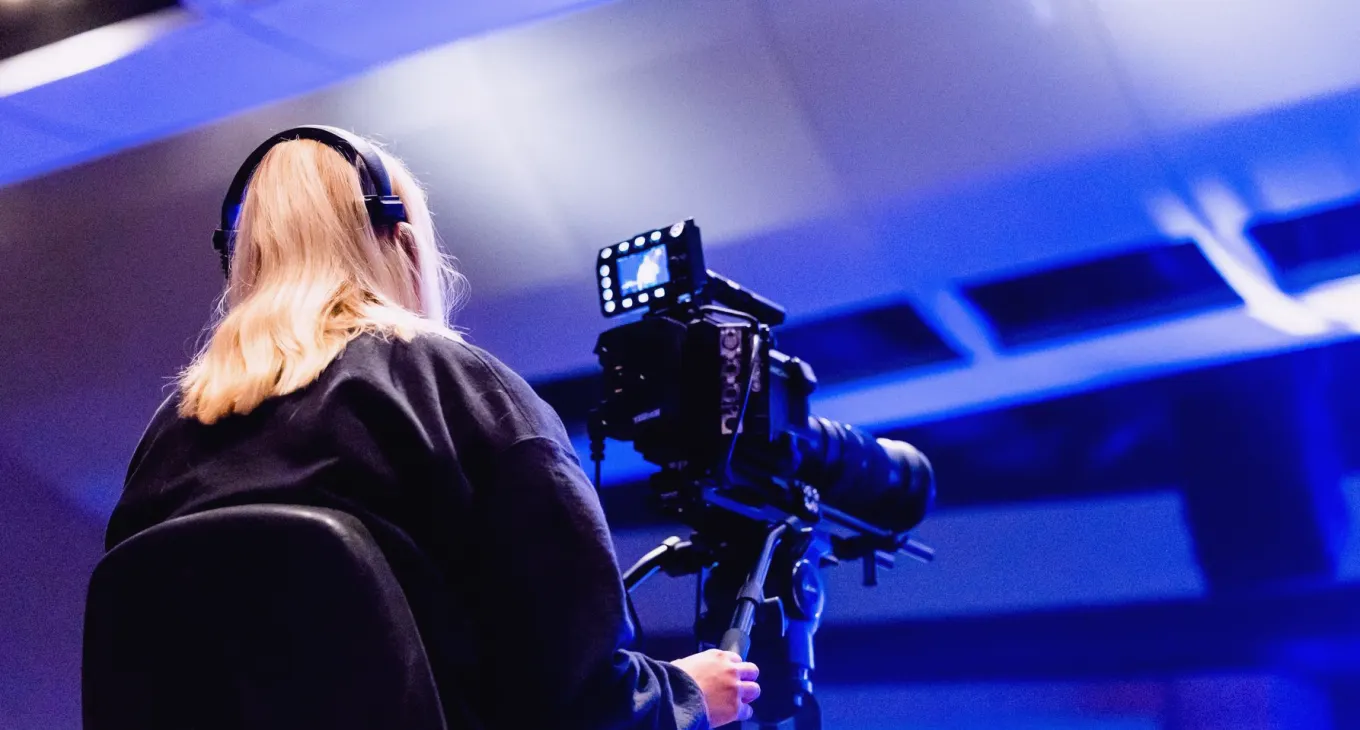
Two ways to hold the same shot
Every trainee who joins our Field Camera Techniques sessions eventually asks the same thing: should I carry the camera on my shoulder, or put it on legs and leave it there? Neither answer is wrong, and both are used in every working newsroom I know. The honest comparison is about what each method gives you when the location refuses to behave.
Handheld means the camera is supported by your body, usually on the shoulder with the eyepiece against your brow. Tripod means the camera sits on a fluid head and legs, and you adjust it rather than carry it. Both produce broadcast-quality pictures in competent hands. The difference lies in speed, steadiness, fatigue and what the viewer is meant to feel when the shot reaches the screen.
In these autumn weeks, with low light arriving early and wet pavements everywhere, the comparison becomes sharper. Conditions change faster than a plan does, and the method you choose decides how much of the story you can still catch. This piece sets the two side by side and ends with a recommendation for people learning the craft.
What handheld gives you
Handheld is quick. You can move from a doorway to a crowd to a face in seconds, follow a person walking away from the building, and change your angle without asking anyone to wait. When a council leader steps out unexpectedly and starts speaking, the operator already on their feet usually gets the line.
It also reads as immediate. A slight, controlled movement tells the audience that someone was present and watching, which suits a breaking incident or a fast doorstep. The cost is fatigue. A broadcast camera is heavy, and tired shoulders produce wandering frames, drifting horizons and soft focus that you will not notice until you are back at the desk.
Handheld rewards good habits. Elbows tucked in, feet apart, breathing steady, and a deliberate pause before pressing record all make a visible difference. Without them, movement looks like nerves rather than intent, and an editor will quietly leave the shot out of the package.
- Fast to reposition when events move
- Suits doorsteps, crowds and following action
- Tiring over a long shoot
- Needs disciplined posture to stay steady
What the tripod gives you
A tripod buys stability, and stability buys time. Once the camera is locked off you can concentrate on exposure, audio levels and what is actually happening in the frame, rather than on keeping your arms still. For a piece to camera, a tripod is usually the sensible choice, because the reporter needs a frame that does not move while they speak.
It also protects your own body on long assignments. A two-hour court wait or a slow-moving public meeting is far kinder to your back with the camera on legs. Held shots on a tripod are clean, and the editor can cut to them with confidence when a handheld shot has shaken.
The weakness is rigidity. Setting up takes a minute or more, and in that minute a moment can pass. Legs also need level ground and space, which a packed pavement or a wet hillside does not always provide. A tripod used badly, with the head loose or the legs uneven, produces tilted pictures that look worse than careful handheld work.
- Steady frame for pieces to camera and interviews
- Frees attention for exposure and sound
- Slower to set up and move
- Needs space and level ground
How the choice plays out on location
Consider two ordinary assignments. At a flooded car park, the story changes by the minute: water levels, a resident wading past, a vehicle moving off. Handheld wins because you cannot predict where the picture will be next. At a planning committee, the story sits in one room for an hour, and a tripod gives you a clean, patient record you can cut around.
Most real jobs are mixed. You might lock off a wide establishing shot on legs, then lift the camera to catch reactions and cutaways by hand. That combination gives the editor both a stable spine and some energy, and it is what we ask trainees to practise in the field sessions.
Audio matters to the decision too. A tripod makes it easier to place a microphone, monitor levels on headphones and watch for wind, while handheld often means one hand is busy. Whichever you choose, the sound still needs to be good, because viewers forgive a rough picture long before they forgive an unintelligible voice.
Common ways each method goes wrong
Handheld goes wrong when the operator keeps moving because they are unsure what to shoot. Constant panning and zooming is a sign of indecision, not energy. A better habit is to find the frame, hold it for a full ten seconds, then move only when something in front of you changes.
The tripod goes wrong in subtler ways. Operators forget to level the head, leave the drag too loose so the camera sags, or place the legs where a passer-by can knock them. Some also fall into the trap of treating a locked-off frame as a safe one, shooting everything wide and static because the setup is already done.
Both methods fail when the operator has not thought about the edit. Ask yourself whether the shot has a start, a middle and a clean ending. Shots without them cost the editor time, and in a newsroom with a deadline, the shots that cut easily are the ones that get used.
- Handheld: restless moves, drifting horizon, tired arms
- Tripod: unlevel head, loose drag, legs in the way
- Both: shots with no clear beginning or end
My recommendation for people learning the craft
Learn the tripod first. It teaches you to see the frame properly, to set exposure deliberately, and to hold a shot long enough for an editor to use it. Those habits transfer directly to handheld work, where they become the difference between controlled movement and wobble.
Once you can build a clean locked-off shot quickly, move to handheld in short stretches, building up your stamina and your posture. Shooting a simple walk-and-talk, then comparing the same scene both ways, shows you faster than any explanation what each method does to the picture.
I would not tell anyone to commit to one method for good. A working camera operator chooses by the story in front of them, and the skill is knowing within a few seconds which is right. The tripod gives you the foundation, handheld gives you the reach, and a good news shooter is comfortable with both.
If you are starting out, begin on the tripod and learn to build a steady, well-exposed frame with clean sound. Add handheld once those habits are automatic, and practise switching between the two on the same story. Neither method is better in itself. Each is a tool for a particular kind of location, and the operator who can choose quickly, then hold the shot properly, is the one editors keep asking for.
Get in touch
- Phone
- 01392 574186
- By email
- hello@obychnyfy.com